
If someone else’s carelessness injured you in Pennsylvania, the law gives you the right to seek compensation. It also sets strict rules on how long you have, how fault is shared and who can bring a claim. Most injury lawsuits must be filed within two years. If you are found mostly at fault, you can lose the claim entirely. Workers’ compensation and wrongful death follow their own rules.
This guide walks through the rules that matter most, in plain language, so you know where you stand before you talk to anyone.
TL;DR
- Most Pennsylvania personal injury and wrongful death lawsuits must be filed within two years of the injury or death. A missed deadline generally ends the claim.
- Pennsylvania uses modified comparative negligence: you can recover if you are 50% or less at fault, but your award is reduced by your share. At 51% or more, you recover nothing.
- Work injuries are handled through workers’ compensation, with a 21-day and 120-day notice schedule and a separate 3-year filing deadline.
- Wrongful death claims can only be brought by certain family members or the estate’s personal representative.
- The sooner you act, the easier it is to preserve evidence, medical records and witness memories.
Table of Contents
- What counts as a personal injury claim in Pennsylvania
- How negligence works under Pennsylvania law
- The two-year statute of limitations
- Fault is shared: Pennsylvania’s 51% rule
- Car accidents: insurance, tort options and your claim
- Work injuries: a different system
- Wrongful death claims
- What you can be paid for
- What to do in the first days after an injury
- Our perspective
- How Pisanchyn Law Firm can help
- FAQ
- Sources
What counts as a personal injury claim in Pennsylvania
A personal injury claim asks the person or business that caused your harm to pay for it. The harm can be physical, financial or both. Most claims rest on negligence, which simply means carelessness: someone failed to act with reasonable care and you were hurt as a result.
Common examples include:
- Car, truck and motorcycle crashes
- Slip and fall injuries on unsafe property
- Dog bites
- Construction site accidents
- Medical errors, such as a missed diagnosis or surgical mistake
- Defective or dangerous products
- Injuries that cause a death in the family
Injuries caused on purpose, such as an assault, are treated differently from carelessness. Legal commentators note that intentional misconduct is distinguished from ordinary negligence, though both generally face the same two-year filing window in Pennsylvania.
Injuries on the job usually fall outside the regular injury lawsuit system. They run through workers’ compensation, covered further below.
How negligence works under Pennsylvania law
To win a negligence case, you generally have to prove four things:
- Duty: the other party owed you a duty of care. A driver owes other road users a duty to drive safely. A store owes customers a reasonably safe space.
- Breach: they failed to meet that duty. They ran a red light, ignored a spill or skipped a safety check.
- Causation: that failure actually caused your injury.
- Damages: you suffered real losses, such as medical bills, lost income or pain.
Miss any one element and the claim weakens. This is why documentation matters so much. Photos of the scene, medical records, incident reports and witness names all help prove these points.
Professional standards in medical cases
When the person who hurt you is a doctor, the question is whether they met the standard of care expected of their profession. The Pennsylvania State Board of Medicine says licensees are held to an ‘acceptable and prevailing practice’ standard and reviews conduct case by case. Malpractice claims usually need expert medical testimony to show how care fell short. If you suspect an error, our pages on medical misdiagnosis and common types of medical malpractice explain what these cases look like.
The two-year statute of limitations
Under 42 Pa. Cons. Stat. § 5524, the general deadline to file a personal injury or wrongful death lawsuit is two years from the date of injury or death. If you miss it, the claim is generally barred and cannot be revived.
Two practical points:
- The clock is for filing a lawsuit, not for talking to an insurer. Negotiating with an insurance company does not stop the clock. Many people lose their rights while waiting on a settlement offer that never comes.
- Exceptions exist, but you should not count on them. Certain situations, such as claims involving children or injuries that were not discovered right away, can change when the clock starts or pauses. Whether one applies to you depends on your facts, so ask an attorney early rather than assume extra time.
Claims against a government body, such as a city, a transit authority or a state agency, can carry different notice requirements and shorter windows. If a public entity may be involved, speak with an attorney quickly.
Fault is shared: Pennsylvania’s 51% rule
Pennsylvania follows a modified comparative negligence rule under 42 Pa. Cons. Stat. § 7102(a). In practice, you can recover damages if you are 50% or less at fault, but the award is reduced by your percentage of fault. If you are 51% or more at fault, you are barred from recovery.
Here is a simple example. Suppose a jury finds your total damages are $100,000 and decides you were 20% at fault. Your recovery would be reduced by 20%, to $80,000. If the jury put your share at 51%, you would receive nothing.
That is why insurers often work to shift blame onto the injured person. Early statements like “I didn’t see him” or “I’m fine” can be used to argue that you share fault. A few habits help:
- Stick to facts when you talk to an adjuster.
- Do not guess about speed, distance or what you could have done.
- Avoid apologizing at the scene. Being polite is fine, but admissions can be twisted.
- Get medical care promptly and follow your treatment plan.
Car accidents: insurance, tort options and your claim
Car crashes are the most common reason people search for injury law, and Pennsylvania has some unusual features.
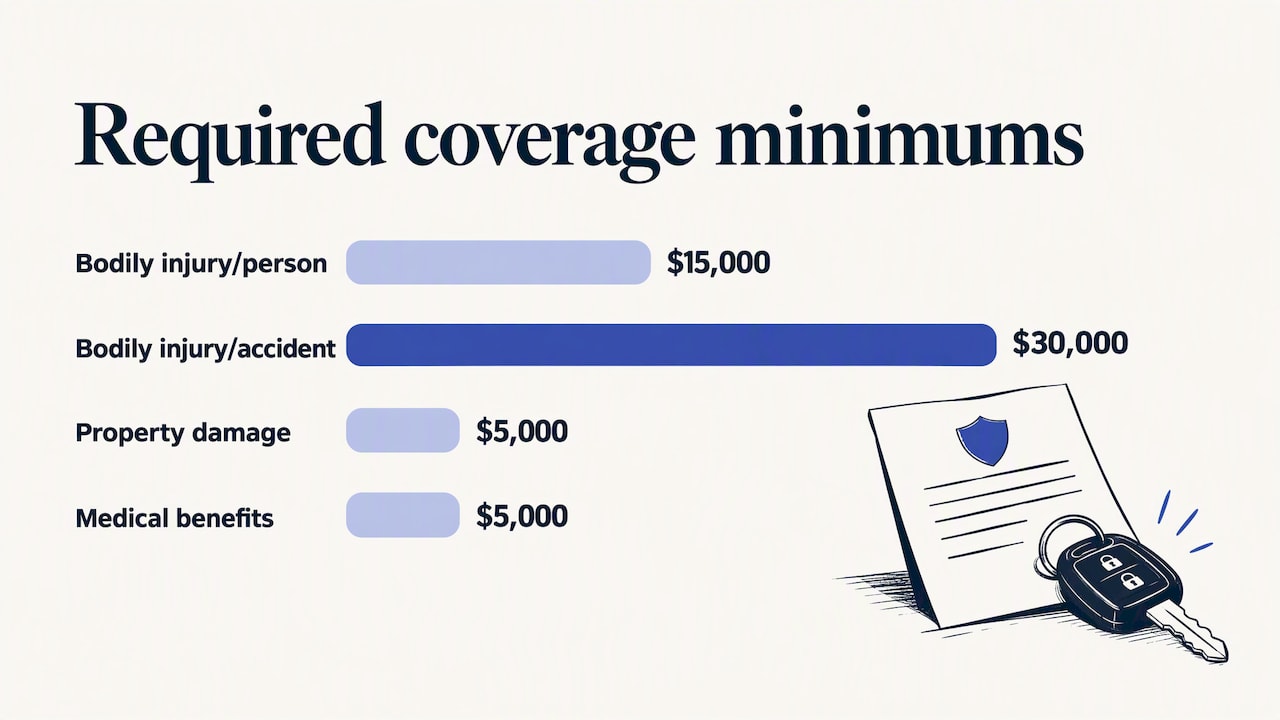
Required coverage. Drivers must carry at least 15/30/5 liability coverage, meaning $15,000 per person and $30,000 per accident for bodily injury, plus $5,000 for property damage. The same source lists $5,000 in first-party medical benefits. Those minimums can fall short after a serious crash. If the at-fault driver has low limits, you may need to look at your own underinsured motorist coverage, if you bought it, and other responsible parties.
Limited tort versus full tort. Pennsylvania lets drivers choose a tort option when buying insurance. Limited tort lowers the premium but restricts your right to sue for pain and suffering except in serious circumstances. Full tort keeps that right. Check your policy declarations page: the option you chose can shape what you can claim after a crash. An attorney can read the policy and tell you how it applies, including whether an exception for serious injury fits your case.
If a commercial truck or company vehicle was involved, more parties may share responsibility, including the driver, the employer and sometimes a maintenance or cargo company. See our pages on car accident and commercial vehicle accident representation.
Work injuries: a different system
If you were hurt on the job, Pennsylvania workers’ compensation generally covers medical care and lost wages without having to prove your employer was careless. In exchange, the rules about notice and deadlines are strict.
| Step | Deadline | What happens if you miss it |
|---|---|---|
| Tell your employer about the injury | Within 21 days | You may lose retroactive benefits |
| Final notice window | Within 120 days | Compensation can be lost permanently, unless the employer already knew |
| File a claim petition if benefits are denied | 3 years from the date of injury | The claim can be barred |
The Department of Labor and Industry confirms the 21-day and 120-day notice rules and the 3-year deadline to file a claim petition in its injured worker pamphlet. The Department stresses that prompt reporting is key.
In plain terms: tell your employer in writing right away, even if the injury seems minor. Back pain that gets worse over weeks, or a hand injury you thought would heal, can become the basis of a long-term claim. Having a written date of notice protects you.
If your employer’s insurance carrier denies or delays your claim, that is the moment to get legal help. We handle these cases for many kinds of workplaces, including warehouse, office and state employees.
A third party can sometimes also be responsible for a work injury, such as a negligent driver or the maker of a faulty machine. In that case there may be a separate injury claim alongside workers’ compensation. Because the two interact, talk to an attorney before settling either one.
Wrongful death claims
When negligence causes a death, Pennsylvania allows a wrongful death action under 42 Pa.C.S. § 8301. It must be brought by eligible beneficiaries, meaning a spouse, children or parents, or by the personal representative of the deceased if no such beneficiaries exist. It can recover medical, nursing, hospital and funeral expenses, among other losses. Damages are distributed to the beneficiaries as if they were taking the personal estate in a case of intestacy.
The two-year deadline applies here too. Grief makes it hard to think about paperwork, but the date is firm. If you are in this situation, our pages on Pennsylvania wrongful death, including local pages for Scranton, Harrisburg and Pittsburgh, explain how these claims proceed.
What you can be paid for
Compensation in an injury case is called damages. They usually fall into two groups:
- Economic damages: medical bills, future medical care, lost wages, reduced earning ability, and property damage.
- Non-economic damages: pain and suffering, loss of enjoyment of life, scarring or disfigurement.
Keep every bill, pay stub and receipt. Keep a short daily note on pain, sleep and activities you can no longer do. These details turn a general claim into a documented one.
What to do in the first days after an injury
- Get medical care. Your health comes first, and records link your injury to the event.
- Report it. Call the police after a crash. Tell your employer about a work injury in writing. Report a fall to the property owner or manager.
- Document everything. Take photos, save clothing and gather names and numbers of witnesses.
- Be careful with insurers. You can give basic facts, but avoid recorded statements or signing releases before you understand your injuries.
- Note your deadlines. Count two years from the injury for most lawsuits, and remember the shorter workers’ compensation notice windows.
- Speak with an attorney. An early conversation costs you nothing with a contingency-fee firm and can prevent mistakes that are hard to undo.
Our perspective
We see the same pattern again and again. People don’t lose strong cases because the law is against them. They lose ground because they waited, spoke too freely to an adjuster or didn’t know a notice rule existed. The rules above are not hard to follow once someone explains them, but they are unforgiving when missed.
We approach every case as if it may go to trial. That does not mean most cases end in court. It means the other side’s insurer can see that the file is prepared, the evidence is organized and we are not afraid to present it to a jury. Preparation tends to make negotiations more honest.
We also believe you deserve direct, personal attention. You should know who is handling your case and be able to ask them questions. Since we work on a contingency basis, you pay no legal fees unless we win your case, so the cost of hiring a lawyer should never be what keeps you from protecting your rights.
— Brian
How Pisanchyn Law Firm can help
Pisanchyn Law Firm represents injured people and families across Pennsylvania, with offices serving Scranton, Harrisburg and Pittsburgh. We have more than 20 years of experience in personal injury, workers’ compensation and disability claims. Our work includes car and truck accidents, medical malpractice, catastrophic injuries, wrongful death, birth injuries and product liability. You can see the full range on our personal injury practice page or start from our home page. If you want a lawyer to look at your deadlines and your options, reach out. There are no fees unless we win.
FAQ
What is the statute of limitations for personal injury in Pennsylvania?
In most cases it is two years from the date of the injury, under 42 Pa. Cons. Stat. § 5524. Wrongful death claims follow the same two-year period from the date of death. If you miss it, your claim is generally barred. Workers’ compensation uses separate notice and filing deadlines.
Can I still recover if I was partly at fault?
Yes, as long as you are 50% or less at fault. Your compensation is reduced by your percentage of fault. If you are found 51% or more responsible, Pennsylvania law bars you from recovering damages.
What counts as a personal injury claim?
It is any claim for harm caused by another party’s carelessness or wrongful act. Car crashes, falls on unsafe property, dog bites, medical errors and dangerous products are common examples. The claim seeks payment for losses such as medical bills, lost income and pain.
What is the minimum bodily injury coverage for car insurance in Pennsylvania?
Drivers must carry at least 15/30/5 liability coverage: $15,000 per person and $30,000 per accident for bodily injury, and $5,000 for property damage. After a serious crash, those limits may not cover all of your losses, so review your own policy and ask an attorney what other coverage may apply.
Who can file a wrongful death claim in Pennsylvania?
A spouse, children or parents can bring the action. If none exist, the personal representative of the deceased can do so. An attorney can help you work out who is eligible in your family’s situation.
Sources
- Pennsylvania Personal Injury Laws and Case Filing Deadlines (Nolo)
- 42 Pa.C.S. § 7102, Comparative negligence
- 42 Pa.C.S. § 8301, Death action
- Pennsylvania Department of Labor and Industry, The Injured Worker Pamphlet
- Pennsylvania Department of Labor and Industry, Reporting an Injury or Occupational Disease
- Pennsylvania State Board of Medicine
- Pennsylvania Car Insurance Laws (The Zebra)
Recommended
- Pennsylvania Wrongful Death Lawyers
- Motorcycle Accident Attorneys
- Harrisburg Car Accident Lawyers
- Harrisburg Catastrophic Injury Lawyers
Made with BabyLoveGrowth to grow search traffic