Side-by-Side & Off-Road Vehicle Accidents
Side-by-sides, UTVs, ATVs, and dirt bikes are designed for off-road use, but that doesn’t mean they’re built to protect occupants the way cars or trucks are.
FreeConsultation
24/7Available to help
PARepresentation
3Office locations
Discuss Your Questions With Our Team
Contact Pisanchyn Law Firm to discuss your circumstances and learn how our attorneys can help.
Call 1-800-444-5309 or use the form to request a consultation.
Tell Us What Happened
Free consultation. Available 24/7.
Why Side-by-Side and Off-Road Vehicle Accidents Are Often Catastrophic
Side-by-sides, UTVs, ATVs, and dirt bikes are designed for off-road use, but that doesn’t mean they’re built to protect occupants the way cars or trucks are. When crashes happen, the results are often far more severe than people expect.
One major factor is center of gravity. Side-by-sides and many ATVs sit higher than traditional vehicles, which makes them more prone to tipping or rolling, especially on uneven ground, hills, or sharp turns. Once a rollover starts, there’s often very little time to react.
Another issue is rollover propensity combined with limited protection. Unlike passenger vehicles, off-road vehicles lack airbags, reinforced crumple zones, and enclosed cabins. Riders are far more exposed to impact, crushing forces, and environmental hazards.
There’s also a terrain and speed mismatch. These vehicles are often driven on trails, gravel roads, farmland, or private property where conditions change quickly. A sudden drop, hidden obstacle, or soft ground can cause a loss of control, particularly at higher speeds.
Finally, off-road vehicles rely heavily on occupant restraints to keep riders inside the protective space of the vehicle during a crash. When something goes wrong during a rollover, that reliance becomes critical — and can directly affect whether someone escapes or becomes trapped.
Common Catastrophic Injuries in Side-by-Side and ATV Accidents
Because off-road crashes often involve rollovers, ejections, or submersion, the injuries tend to be severe and life-altering. Common catastrophic injuries include:
-
Drowning after submersion, particularly when vehicles roll into creeks, ponds, or flooded areas
-
Spinal cord injuries, including partial or complete paralysis
-
Traumatic brain injuries, even when helmets are worn
-
Crush injuries caused by the weight of the vehicle during a rollover
-
Asphyxiation, when a rider is pinned or trapped
-
Wrongful death, especially in rollover, ejection, or water-related accidents
These injuries often require extensive medical treatment, long-term rehabilitation, and ongoing care. In many cases, they permanently change a person’s ability to work or live independently.
Rollover and Entrapment Risks
Rollovers are among the most dangerous types of off-road vehicle accidents. When a side-by-side, ATV, or UTV tips or flips, occupants can be pinned inside the vehicle or crushed underneath it.
In some accidents, the vehicle comes to rest upside down or on its side, making escape extremely difficult. In those moments, time becomes critical. Fires, fuel leaks, rising water, or pressure on the chest can quickly turn survivable crashes into fatal ones.
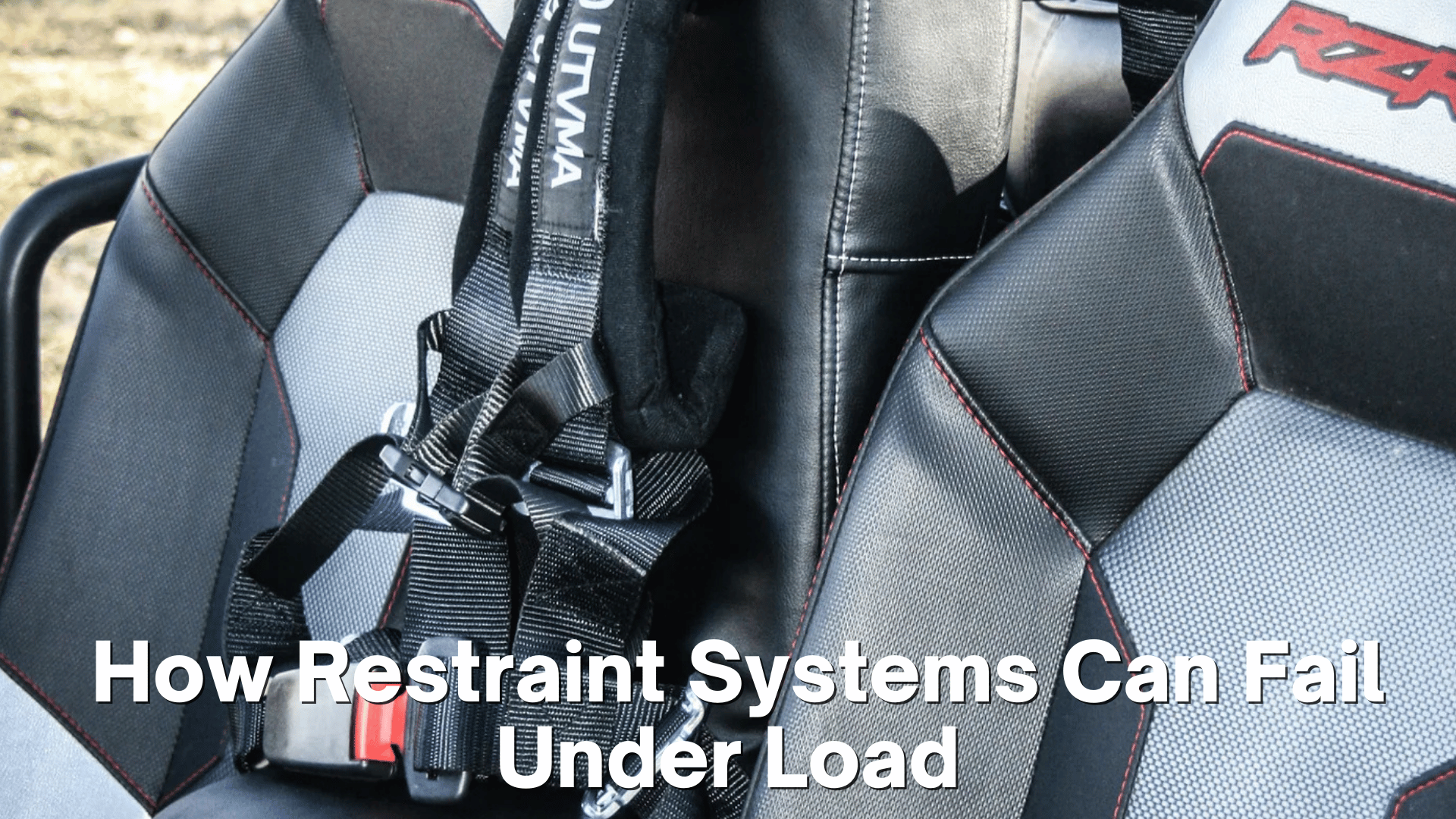
Escape often depends on the ability to release restraints quickly and safely while the vehicle is under stress. When that release is delayed or obstructed, the risk of serious injury or death increases dramatically.
In many catastrophic side-by-side accidents, the ability to release a seat belt after a rollover becomes the difference between escape and tragedy.
When a Side-by-Side or ATV Accident Raises Product Liability Concerns
Not every catastrophic off-road accident is caused solely by rider error or terrain. In some cases, equipment performance plays a significant role in how severe the outcome becomes.
Restraint systems, doors, roll cages, harnesses, and other safety components are designed to protect occupants during foreseeable events like rollovers. When those components fail, malfunction, or do not perform as expected under real-world conditions, injuries can be far worse than they otherwise would have been.
Manufacturers and component suppliers have legal duties to design, test, and warn about potential safety risks associated with their products. When catastrophic injuries are linked to defective side-by-side seat belt systems, door latches, or other safety equipment, a product liability investigation may be warranted.
These cases often require careful analysis of the vehicle, its components, and how they functioned at the time of the crash.
Legal Options After a Catastrophic Off-Road Vehicle Accident
Victims of catastrophic side-by-side, ATV, UTV, or dirt bike accidents often face overwhelming challenges after a crash. Depending on the circumstances, legal options may include claims related to:
-
Emergency medical treatment and long-term medical costs
-
Ongoing rehabilitation and in-home care
-
Lost income and reduced earning capacity
-
Wrongful death claims for surviving family members
-
Product liability investigations involving vehicle or component defects
-
Premises liability claims when unsafe property conditions contributed to the accident
These cases are rarely simple. They often involve multiple parties, technical evidence, and questions about vehicle design, maintenance, or property safety.
Understanding what caused the accident and whether it could have been prevented is a critical first step toward protecting your future.
Common Questions About Side-by-Side and ATV Accidents
Why are side-by-side and ATV accidents so dangerous?
Side-by-side and ATV accidents are dangerous because these vehicles have a high center of gravity, are prone to rollovers, and offer limited protection compared to passenger vehicles. When crashes occur, riders are often exposed to crushing forces, ejection, or entrapment.
What types of injuries are common in catastrophic side-by-side accidents?
Catastrophic side-by-side and ATV accidents often result in serious injuries such as spinal cord damage, traumatic brain injuries, crush injuries, asphyxiation, drowning after submersion, and, in some cases, wrongful death.
Why are rollovers especially dangerous in off-road vehicle accidents?
Rollovers are especially dangerous because they can pin occupants inside the vehicle or trap them underneath it. When a vehicle comes to rest upside down or on its side, escape may be difficult, and time-sensitive risks like fire or water exposure can increase injury severity.
Can equipment or safety features affect the severity of injuries in a side-by-side accident?
Yes. Safety features such as seat belts, doors, roll cages, and harnesses play a critical role during rollovers and crashes. When these components fail to perform as expected, injuries may be more severe than they otherwise would have been.
Are side-by-side accidents limited to recreational trails?
No. Side-by-side, ATV, and UTV accidents can occur on trails, private property, farmland, construction sites, and other premises. In some cases, unsafe property conditions may contribute to the accident.
When does a side-by-side accident raise product liability concerns?
A side-by-side accident may raise product liability concerns when injuries are linked to the performance or design of safety equipment, restraints, or other vehicle components that were intended to protect occupants during foreseeable events like rollovers.
What legal options exist after a catastrophic ATV or side-by-side accident?
Depending on the circumstances, legal options may include personal injury claims, wrongful death claims, product liability investigations, and premises liability claims. These cases often involve complex factors and require careful investigation.
ATV / UTV Accident News


Related Services
Talk With Pisanchyn Law Firm
Free consultation • Available 24/7