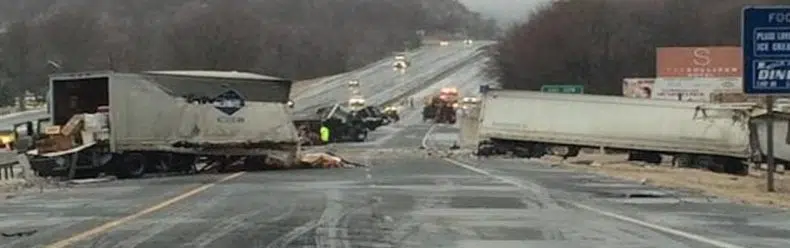
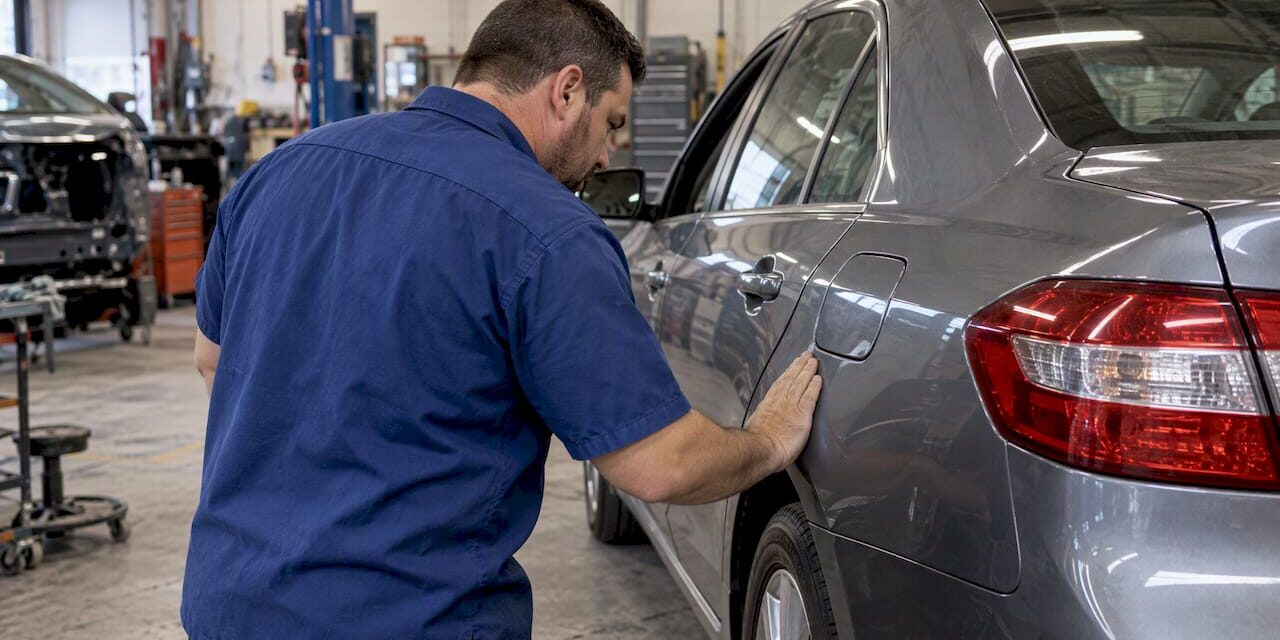
Your car is back from the body shop and looks perfect. But it now has an accident on its history, and a buyer or dealer will pay less for it. That gap is called diminished value. In Pennsylvania, you can generally pursue it from the at-fault driver’s insurance company, but you have to prove it. The insurer will not add it to your repair payment on its own.
This guide explains who can file, what evidence matters, how the process runs step by step, and where claims go wrong. It also covers the question people ask next: what if the car is a total loss instead?
TL;DR
- Diminished value is the difference between what your car would be worth without the crash and what it is worth after competent repairs.
- In Pennsylvania, the usual route is a claim against the at-fault driver’s liability insurer, not your own collision coverage.
- There is no standard payout. Loss varies by vehicle, damage, and valuation method, so a vehicle-specific appraisal beats any formula.
- Newer, well-kept cars with clean histories tend to have the strongest claims. Older cars may have little or no loss.
- Insurers can and do dispute these claims. A denial is not the end: you can add evidence, negotiate, or talk to a lawyer.
Table of Contents
- What diminished value actually means
- Does Pennsylvania allow a diminished value claim?
- When you probably cannot recover it
- How to file a diminished value claim, step by step
- How much is a diminished value claim worth?
- Why insurers deny or reduce these claims
- Diminished value vs. total loss
- How deadlines work
- Our perspective: protect the whole claim, not just the car
- When it makes sense to call a lawyer
- FAQ
- Sources
What diminished value actually means
Diminished value is the loss in market value that remains after a vehicle is properly repaired. The Insurance Information Institute explains that buyers may pay less for a repaired car even when the repairs meet high standards. The reason is simple: a vehicle with an accident record is worth less to most shoppers than an identical one without it.
Researchers who study the issue split it into three types, according to a study published by the National Association of Insurance Commissioners (NAIC):
| Type | What it means | Example |
|---|---|---|
| Inherent | Loss because the car now has an accident history, even if repairs are perfect | A two-year-old SUV with a structural repair on its history report |
| Repair-related | Loss because the repair was incomplete or poor quality | Paint that does not match, panels that do not line up |
| Parts-related | Loss because non-original or used parts were installed | Aftermarket bumper in place of the manufacturer’s part |
The NAIC study notes that inherent loss is the most subjective of the three, because it rests partly on market perception. That is why two appraisers can look at the same car and reach different numbers.
Does Pennsylvania allow a diminished value claim?
Yes, in the most common situation. If another driver caused the crash and your car is repairable, Pennsylvania law generally lets you seek diminished value as part of your property damage claim against that driver. In a negligence claim like this, damages can include the difference between the car’s value before and after the harm, or reasonable repair costs plus an allowance for any value difference that remains after repairs.
The key phrase is “at-fault driver.” Pennsylvania courts have drawn a line between two kinds of claims:
- Third-party claim. You claim against the negligent driver (through their insurer). Diminished value is a recognized part of the damages.
- First-party claim. You claim under your own policy. This is much harder. In Randy v. Progressive Northern Insurance Co., the Pennsylvania Superior Court looked at “repair or replace” policy language. It held that wording did not itself require the insurer to pay for the market-psychology loss.
Do not mix these up. The Randy decision is about what your own policy promises. It does not say you cannot recover diminished value from the driver who hit you.
One more point from the national picture: Wikipedia’s summary of state law reports that all states except Nebraska allow third-party diminished value claims. Pennsylvania sits with the majority on that point.
When you probably cannot recover it
Before you spend money on an appraisal, check these situations.
- You caused the crash. The Insurance Information Institute notes that standard collision coverage commonly excludes diminished value when the policyholder caused the accident.
- The car was totaled. Diminished value is a repairable-vehicle concept. If the insurer pays the car’s value as a total loss, there is no repaired car to have lost value. We cover that below.
- The car is old or already damaged. Age and condition matter. An older vehicle whose market value already reflects wear or prior damage may show little or no additional loss.
- You cannot show the loss. A claim built on a feeling that the car is worth less will not hold up. You need market evidence.
If you are unsure which side of the line you are on, that is a good reason to ask a lawyer before you accept a final property damage settlement.
How to file a diminished value claim, step by step
The process is closer to a property damage negotiation than to an automatic benefit. A consumer guide from the Washington Insurance Commissioner makes the same point: diminished value requires supporting proof and is typically pursued against the at-fault party’s insurer. Washington is a different state, so use it for the general approach and not as Pennsylvania law.
Step 1: Establish fault
Get the police report if there is one, photos of the scene, witness names, and the other driver’s insurance information. A clear fault finding against the other driver is the foundation. If fault is disputed, the diminished value claim will be disputed too.
Step 2: Document the damage before and after repair
Keep every estimate, photo, invoice, and parts list. Photograph the car before repairs begin if you can. Ask the shop to record whether original manufacturer parts were used, and whether any structural or frame work was done. Those details feed directly into the value loss.
Step 3: Finish repairs and keep the paperwork
Most advisers recommend pursuing the claim once the car is fully repaired, because the loss is measured against the repaired condition. Keep the final invoice and any warranty on the work.
Step 4: Get a vehicle-specific valuation
This is where claims are won or lost. A useful valuation compares your car’s market value before the crash with its value after repairs, using real market data: comparable listings, trade-in and retail value ranges, mileage, trim, condition, and the nature of the damage. Independent appraisers who specialize in this work exist across Pennsylvania. Choose one who will put the method and the comparables in writing, since the insurer will question them.
Step 5: Send a written demand
Send the at-fault driver’s insurer a demand letter with your evidence: the police report, repair invoices, photos, the appraisal, and a clear dollar figure. State the amount you are asking for and why. Keep a copy and send it in a way that gives you proof of delivery.
Step 6: Negotiate
Expect a counteroffer, often well below your figure. Respond to each objection with evidence rather than frustration. If the insurer says your car’s loss is smaller, ask what valuation method it used and what comparables it relied on.
Step 7: Escalate if needed
If talks stall, you have options. You can submit more evidence, file a complaint with the state regulator, or take the matter to court. The Pennsylvania Insurance Department accepts complaints about insurers by paper form or online account, according to Legal Aid of Southeastern Pennsylvania. Keep in mind that a regulator complaint addresses how the insurer handled your claim. It does not guarantee a particular amount.
How much is a diminished value claim worth?
Honestly, there is no Pennsylvania average that applies to your car. The NAIC study states that loss amounts vary significantly with the vehicle, repairs, contract language, case law, and valuation source.
You will see a rule of thumb online. The NAIC study reports an average expected diminished value loss of 10% to 20% of direct property damage. That is an actuarial observation across many claims. It is not something Pennsylvania guarantees you, and it can be far off for a specific car.

You will also see the “17c formula.” It is popular with insurers and consumer sites, but it originated in Georgia. It should not be treated as Pennsylvania law. At best it is a starting point for a conversation, and an insurer may use it to produce a low number. A real appraisal of your specific car is stronger evidence.
What pushes a claim up or down
| Factor | Tends to strengthen the claim | Tends to weaken the claim |
|---|---|---|
| Vehicle age | Newer model year | Older vehicle |
| Prior history | Clean history report before the crash | Earlier accidents on record |
| Type of damage | Structural or frame damage, airbag deployment | Minor cosmetic damage |
| Repair quality | Documented, original parts | Mismatched or aftermarket parts (this may support a repair-related claim, though) |
| Mileage and condition | Low mileage, well maintained | High mileage, visible wear |
| Evidence | Written appraisal with comparables | No documentation |
Why insurers deny or reduce these claims
Insurers often resist diminished value, and it helps to know their usual arguments in advance. Based on the research we reviewed, they typically say:
- Coverage does not apply to this type of claim or this policy.
- You were at fault, fully or partly.
- Your evidence does not show a real post-repair market difference.
- The car is too old, has high mileage, or had prior damage.
- Their own valuation shows a smaller loss than yours.
The Washington regulator warns that insurers may dispute the claim even when a private company documents the lower value. So treat an appraisal as strong evidence, not as a guarantee.
A denial is not necessarily final. You can answer with better documentation, a second opinion on value, or a revised demand. If the claim is large enough to matter, a lawyer can review whether the insurer is applying the right measure of damages.
Diminished value vs. total loss
People often ask which one applies to them. The difference comes down to whether the car is worth repairing.
| Repairable car | Total loss | |
|---|---|---|
| What the insurer pays | Repair cost | The car’s value before the crash, less any deductible if your own coverage pays |
| Diminished value? | Possible, if another driver was at fault | Generally not, since there is no repaired car left to lose value |
| What to dispute | Repair scope and any remaining value loss | The valuation of the car itself |
| Your focus | Appraisal after repairs | Comparable vehicles, options, condition, and mileage |
If the insurer declares a total loss, your fight is over the pre-crash value of the car. Gather listings for comparable vehicles in your area, service records, and receipts for recent upgrades such as new tires. If the insurer is undervaluing the car, a pushback with that evidence is often effective.
If the insurer says the car is repairable, think about whether you want it repaired, and keep in mind that diminished value only becomes measurable once repairs are complete.
The Kelley Blue Book also notes that in most states, a diminished value claim is filed against the at-fault driver’s insurer, and that a poor repair job is a separate issue from the loss tied to the accident itself.
How deadlines work
In Pennsylvania, property damage claims against a negligent driver are generally subject to a two-year filing deadline for a lawsuit. Some online summaries state this for diminished value specifically. Because deadlines can have exceptions, and because insurance negotiations do not stop the clock, confirm the date for your situation with an attorney early.
Do not wait for repairs, an appraisal, and a long negotiation to eat up the time. Start gathering evidence right after the crash.
Our perspective: protect the whole claim, not just the car
At Pisanchyn Law Firm, our work is serious injury cases, so we often meet people at the worst moment: hurt, out of work, and dealing with a damaged car on top of everything else. Our advice on diminished value is practical.
First, keep the injury claim and the vehicle claim in your mind at the same time. The people who call us are usually focused on medical care, as they should be. But early statements to an insurance adjuster, signed releases, and quick property damage settlements can affect the rest of the case. Read anything before you sign it. A property damage release that says it settles everything arising from the accident can create problems if you also have injuries.
Second, document everything from day one. Photos, repair invoices, and a record of every call with the insurer cost nothing and make every part of the case stronger.
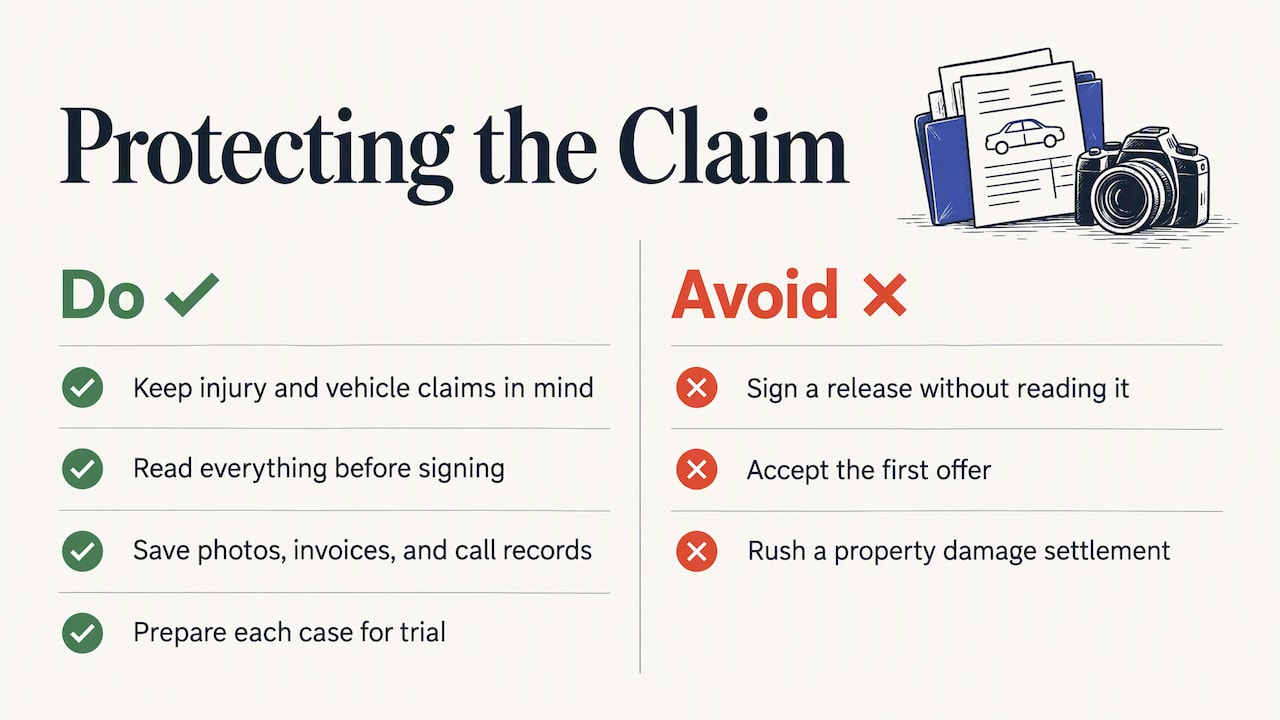
Third, be realistic. Diminished value is a real, recoverable loss in the right circumstances, but it is an evidence-driven negotiation. A claim for a three-year-old car with structural repairs looks very different from one for a ten-year-old car with a dented door. We would rather you know that up front.
Finally, we prepare every case as if it may go to trial, because insurers respond differently when they know a claimant is ready to litigate. That approach is how we handle injury claims, and the same mindset applies to any dispute with an insurer: know your evidence, know your numbers, and do not accept the first offer just because it is the first offer.
— Brian
When it makes sense to call a lawyer
Many people handle a simple diminished value claim themselves. Consider legal help when:
- You were injured in the crash. Property damage and injury claims are linked, and what you say or sign for one can affect the other.
- Fault is disputed, or the other driver was uninsured or underinsured.
- The vehicle is expensive, new, or has major structural repairs, so the potential loss is significant.
- The insurer has denied the claim or will not explain its valuation.
- A commercial vehicle or truck was involved. These cases often involve more than one insurer and more complex liability.
If you were hurt in a collision anywhere in Pennsylvania, our car accident lawyers can review the whole picture, including your injuries, lost income, and vehicle losses. We handle injury cases on a no-win, no-fee basis, so you pay no legal fees unless we win your case. We also have local pages for Pittsburgh and Harrisburg drivers, and for crashes involving commercial vehicles.
FAQ
Does Pennsylvania allow diminished value claims?
Yes, when another driver caused the crash and your car was repaired, you can generally seek diminished value from that driver’s insurer. Claims under your own policy are much less certain, because Pennsylvania courts have read standard “repair or replace” language narrowly. An attorney can tell you which route fits your policy.
What is the average payout for a diminished value claim?
There is no reliable Pennsylvania average. Loss depends on the vehicle, the damage, the repairs, and the valuation method. A national actuarial study observed average losses of 10% to 20% of direct property damage, but that is not a guaranteed amount, and your car’s number may be higher or lower.
Is it worth filing a diminished value claim?
It can be, especially for newer, low-mileage vehicles with clean histories and significant repairs. It is less likely to pay off for older cars or minor damage. A written appraisal before you file will show you whether the potential recovery justifies the effort.
Can the insurance company deny my claim?
Yes. Insurers may deny or reduce a claim if you were at fault, the evidence is thin, the car is old, or they dispute the valuation. You can respond with better documentation, negotiate, file a complaint with the Pennsylvania Insurance Department, or consult an attorney.
Sources
- What is diminished value? (Insurance Information Institute)
- Automobile Diminished Value Claims (NAIC Journal of Insurance Regulation)
- Randy v. Progressive Northern Insurance Co. (PlainSite)
- Filing an auto insurance claim (Washington Office of the Insurance Commissioner)
- Diminished value (Wikipedia)
- Diminished Value of a Car (Kelley Blue Book)
- How to file a complaint with the Pennsylvania Department of Insurance (Legal Aid of Southeastern Pennsylvania)
Recommended
- Harrisburg Catastrophic Injury Lawyers
- Pennsylvania Wrongful Death Lawyers
- Harrisburg Wrongful Death Lawyers
Written with BabyLoveGrowth to earn links