

A lump sum pays your whole settlement in one payment. A structured settlement pays it over time, usually through an annuity, on a schedule fixed in the agreement. Neither is better for everyone. The right choice depends on your injuries, your medical future, your debts, your public benefits and how comfortable you are managing a large amount of money.
This guide explains how each option works, how they compare, and the questions to answer before you sign. It also covers the “cash now” offers that arrive after a structured settlement is in place, because those offers cost many people far more than they expect.
TL;DR
- A lump sum gives you every dollar at once. That helps with urgent debt and medical bills, but the money can run out if it is not planned carefully.
- A structured settlement pays on a fixed schedule, which protects against overspending. It is hard to change once it is set, so it needs to be designed with your future costs in mind.
- Many cases use both: a lump sum for immediate needs and structured payments for long-term care or income.
- Selling future payments to a company for cash now can leave you with far less than the payments are worth, and Pennsylvania requires court approval.
- Get the offer in writing, and have your own attorney and a financial or tax professional review it before you decide.
Table of Contents
- What a lump sum settlement is
- What a structured settlement is
- Structured settlement vs. lump sum at a glance
- When a lump sum makes more sense
- When a structured settlement makes more sense
- Taxes: what to ask before you decide
- Selling your payments for cash now
- How to decide: a practical checklist
- Our perspective
- Talk to a Pennsylvania injury attorney before you decide
- FAQ
- Sources
What a lump sum settlement is
A lump sum is a single payment of your settlement, after attorney fees, case costs and any medical liens are paid. You decide what to do with the rest. You can pay off bills, cover treatment, replace lost income, buy a safer car or invest.
The appeal is control and speed. The risk is that control cuts both ways. Experts who work with injury claimants point to the danger of spending through the money too quickly, especially when the injury will limit your ability to work for years.
What a structured settlement is
In a structured settlement, the defendant or its insurer agrees to pay damages as a series of payments. The payments might be monthly, quarterly, annually or in larger amounts at set milestones, such as a child’s 18th birthday or a planned surgery. The insurer typically funds the payments by buying an annuity.
The tax rules are a big part of the appeal. The IRS describes a structured settlement as an arrangement for periodic payments of damages excludable from income under section 104(a)(2), which covers damages for personal physical injuries or physical sickness, or workers’ compensation under section 104(a)(1). The payments must be fixed and determinable, and the obligation is typically transferred to an assignee through a qualified assignment. Under 26 U.S. Code § 130, that assignment is what allows the arrangement to work for the party making the payments.
The flip side is rigidity. The same IRS instructions note that qualified assignments require that payments cannot be accelerated, deferred, increased or decreased by the recipient. You cannot simply ask for more when your car breaks down.
Structured settlement vs. lump sum at a glance
| Factor | Lump sum | Structured settlement |
|---|---|---|
| When you are paid | All at once, after fees and liens | Over months, years or a lifetime, on a fixed schedule |
| Flexibility | Full control over how it is used | Limited once the schedule is set |
| Protection from overspending | None built in | Built in by design |
| Investment control | You choose, and you carry the risk | The annuity issuer carries the investment risk |
| Access in an emergency | Immediate, if you have kept the money | Limited, unless planned for in advance |
| Effect on means-tested benefits | Can count as a resource or income | Can be designed to protect eligibility |
| Best fit | Short-term, defined losses and strong money management | Long-term needs, minors, catastrophic injuries |
When you compare offers, do not compare the total of future payments with a lump sum figure. A structured offer should be priced out in its cost and its payment schedule, so ask for both in writing and compare them as a dollar value today.
When a lump sum makes more sense
A lump sum tends to fit when your losses are known and mostly in the past. Consider it if:
- You have a recoverable injury and your medical bills are mostly paid or can be estimated.
- You have high-interest debt that costs you more each month than a payment stream would give you.
- You need to pay for something specific and time-sensitive, such as home modifications, a vehicle or a medical procedure.
- You have reliable financial support, such as an advisor you trust, and a plan for the money.
The National Structured Settlements Trade Association is an industry group that promotes structured settlements, so weigh its framing with that in mind. Still, its main point holds: a large sum with no plan is easy to lose, even for careful people.
When a structured settlement makes more sense
Structured payments often make sense when the injury will affect you for a long time. That includes:
- Catastrophic injuries. Spinal cord injuries, traumatic brain injuries and severe burns can mean lifelong care. A schedule of payments can cover rent, groceries and caregivers for years.
- Injured children. Payments can be timed to education costs or adulthood. Pennsylvania courts commonly review minors’ settlements, so ask your attorney how that process works in your county.
- Wrongful death. Families who lose a provider may want steady income rather than a single payment to manage during grief.
- People who receive means-tested benefits. The SSA’s operations manual explains that settlements can count as income or a resource for Supplemental Security Income. A structured arrangement, or a properly designed trust, may help protect eligibility. This is a technical area, so have your attorney review it before you accept any offer.
If you worry that a pure structure is too rigid, ask about a hybrid. A common approach is to take part of the money now and structure the rest. You can also ask for payments that increase over time, so they keep up with rising costs, or for larger payments at planned dates.
Taxes: what to ask before you decide
People search for “how are structured settlements taxed” because the answer affects the choice. The IRS describes qualifying structured settlements as periodic payments of damages excludable from gross income under section 104(a)(2) or 104(a)(1). The tax-free status applies to the payments that qualify, and the structure has to be set up correctly from the start.
Tax treatment varies by what the money is for. Damages for a physical injury are treated differently from other kinds of recovery, and your case may include several components. Before you accept either form, ask a tax professional to review how your settlement is allocated. Do not rely on a general article, including this one, for your own tax answer.
Selling your payments for cash now
Some people choose a structured settlement, then years later face a financial emergency. At that point, companies that buy future payments in exchange for a lump sum may contact you. These deals are called factoring transactions, and they deserve extra caution.

The consumer warning published by the National Structured Settlements Trade Association says you could receive much less cash than your settlement is worth. It gives an example in which a stream of future payments totaling $50,000 might be offered at $15,000 today. Treat that as an illustration of how steep the discount can be, not as a typical quote. Every deal differs, so ask for the numbers on yours.
What protects you
- Federal excise tax. Under 26 U.S. Code § 5891, a buyer of structured settlement payment rights in a factoring transaction faces a 40 percent tax on the factoring discount, unless the transfer is approved by a qualifying court order. The IRS instructions for Form 8876 explain how the tax is reported.
- Pennsylvania court approval. Pennsylvania’s Structured Settlement Protection Act provides that an annuity issuer does not have to pay a transferee unless the payee has petitioned for the transfer and a court has granted it by final order with express written findings.
- Independent advice. Court hearings can be short and one-sided. The trade association argues that having your own independent advocate is the most important protection against bad terms. It also reports that approval rates for these deals often drop when a court appoints an independent advisor.
Before you sign anything
- Ask for a written statement of the total amount of remaining payments, their current value, and every fee and discount rate.
- Have your own attorney or an independent financial advisor review it, not the company that is marketing the deal.
- Look at alternatives first, such as negotiating with creditors or applying for hospital charity care.
- Remember that the sale is permanent. You give up a guaranteed income stream for a one-time payment.
How to decide: a practical checklist
Work through these questions with your attorney before you accept an offer.
- What will your medical care cost over the next 5, 10 and 30 years? If the answer is uncertain, structure part of the money to cover it.
- Can you return to your old job? If not, how much income does the settlement have to replace, and for how long?
- What do you owe now? Liens, medical bills and high-interest debt may be best paid from a lump sum.
- Do you receive SSI, Medicaid or other benefits? Check how a lump sum would count before you take it.
- Who will manage the money? Be honest about your comfort with investing, and about the pressure from family and friends once a payout becomes known.
- What does the structure cost? Ask for the present value of the structured offer and compare it with the cash alternative on paper.
- What happens if you die early? Ask whether payments continue to a beneficiary and for how long.
A simple example
Suppose a settlement must cover two things: a $40,000 hospital balance and a lost income stream that will last years. Paying the hospital balance from a lump sum may be sensible. Putting the remaining income replacement into monthly payments may protect your household from running short in year three. The figures here are invented to show the reasoning, not a prediction for any case.
Our perspective
We handle serious injury, wrongful death and workers’ compensation cases across Pennsylvania, and we see the same pattern: the settlement decision is rarely about the number alone. It is about whether the money matches the life you have to rebuild.
We prepare every case as if it may go to trial. That matters here because the strongest negotiating position produces more options, and more options give you a real choice between payment forms. We also work on contingency, so you pay no legal fees unless we win your case. That keeps our interest aligned with yours when we talk about the terms.
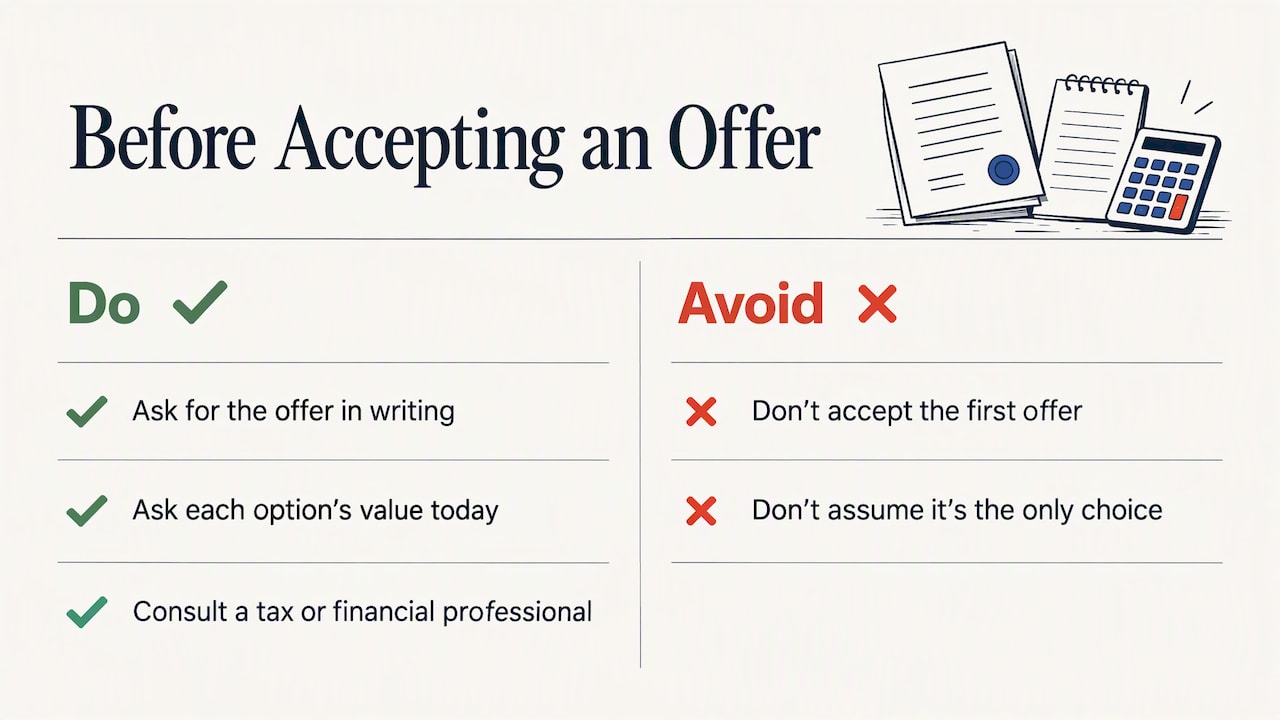
Our advice is simple. Do not accept a form of payment because it is the first one offered, or because someone tells you it is the only choice. Ask for the offer in writing, ask what each option is worth today, and bring in a tax or financial professional for the parts outside the law. A settlement should be built for what comes after the case ends.
— Brian
Talk to a Pennsylvania injury attorney before you decide
If you were hurt in a crash, a workplace accident or by medical negligence, the form of payment is a decision best made with your lawyer, before you agree to a number. Our team represents injured people and families across Pennsylvania, and you pay nothing unless we win. See our personal injury practice to learn how we work, or if a loved one was seriously hurt, read about our catastrophic injury representation in Pittsburgh.
FAQ
Is a structured settlement better than a lump sum?
Not always. A structured settlement protects you from spending everything at once and suits long-term needs, while a lump sum gives you flexibility and immediate access. Many people combine the two. Your injuries, debts and benefits decide which is better.
Can I change a structured settlement after it is set?
Generally no. The IRS instructions say payments in a qualified assignment cannot be accelerated, deferred, increased or decreased by the recipient. That is why the schedule should be planned carefully before you sign.
Can I sell my structured settlement payments for a lump sum?
Sometimes, but it is tightly regulated. In Pennsylvania, a court has to approve a transfer by final order, and a federal 40 percent excise tax applies to buyers who skip the required approval. Often the cash offered is much less than the payments are worth, so get independent advice first.
Does a lump sum affect SSI or other benefits?
It can. The Social Security Administration may count a settlement as income or a resource, which can affect Supplemental Security Income eligibility. Talk with your attorney before accepting any settlement if you receive means-tested benefits.
How much of a $25,000 settlement will I actually get?
It depends on attorney fees, case costs and any liens, such as medical bills, that must be repaid from the recovery. Ask your attorney for a written breakdown before you accept, showing what you would receive in each payment form.
Sources
- IRS: Instructions for Form 8876
- 26 U.S. Code § 130, Certain personal injury liability assignments
- 26 U.S. Code § 5891, Structured settlement factoring transactions
- Pennsylvania Structured Settlement Protection Act, Act 1 of 2000
- SSA POMS SI 00830.515, Awards and Settlements
- What to know before giving up your settlement payments for a lump sum
- NSSTA: Frequently Asked Questions
- NSSTA: Protecting structured settlements from factoring industry abuses
Recommended
- Scranton Catastrophic Injury Lawyers
- Scranton Wrongful Death Lawyers
- Scranton Construction Accident Lawyers
- Scranton Slip Trip or Fall Lawyers