
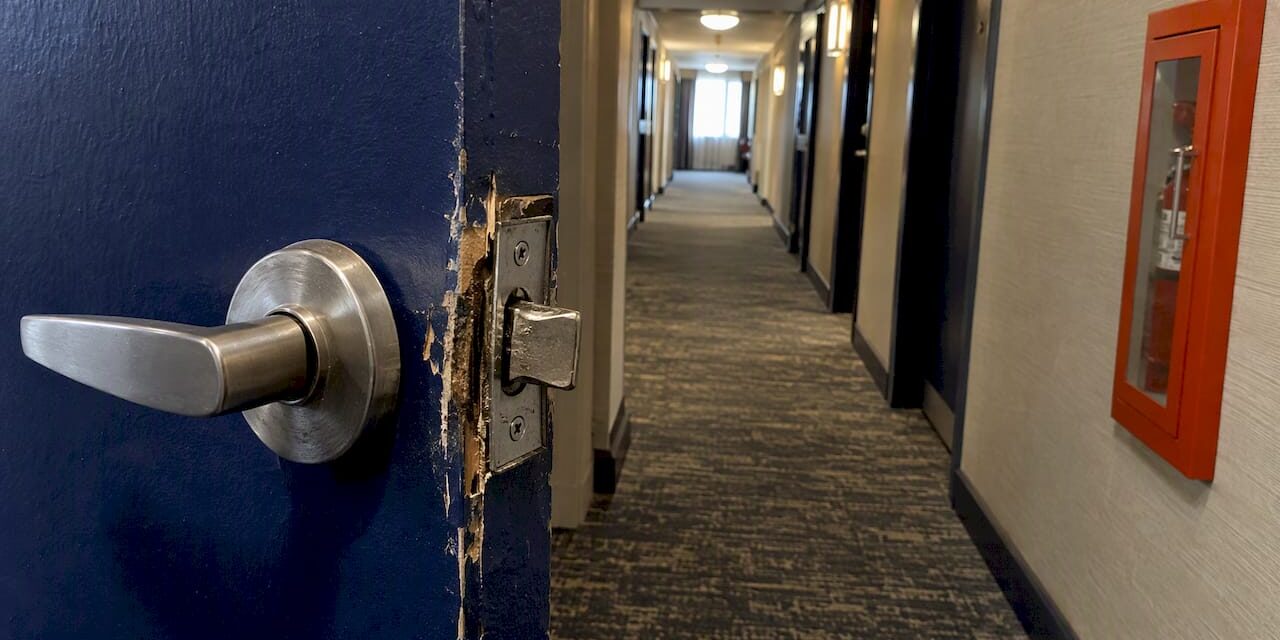
If you were hurt at a hotel, the hotel may be legally responsible. A hotel injury attorney can investigate what happened, prove the hotel knew or should have known about the danger, and pursue compensation for your medical bills, lost income, and pain. At Pisanchyn Law Firm, we handle these claims across Pennsylvania as premises liability cases, and you pay no fee unless we win your case.
TL;DR
- Hotels owe guests a high level of care. They must inspect, repair hazards, or warn guests about them.
- Slips and falls are the leading cause of guest injuries, but pool accidents, bad security, and unsafe rooms also lead to claims.
- Your claim turns on proof: photos, the incident report, medical records, and witnesses. Collect them early.
- Most Pennsylvania injury lawsuits have a two-year filing deadline, so do not wait.
- If you were hurt while working at a hotel, workers’ compensation rules apply instead.
Table of Contents
- When a hotel is responsible for your injury
- Common hotel injuries and what causes them
- What to do after a hotel injury
- What compensation can cover
- Pennsylvania deadlines and fault rules
- If you were hurt while working at a hotel
- When to call a hotel injury attorney
- Talk to Pisanchyn Law Firm
- FAQ
- Sources
When a hotel is responsible for your injury
A hotel guest is what the law calls an invitee. Guests are entitled to a high amount of protection, and hotels must inspect the property, keep it reasonably safe, and promptly repair hazards or warn guests about them, according to a summary of hotel injury liability. To win, you generally show that the hotel owed you a duty of reasonable care, breached it, and that the breach caused a foreseeable injury or loss.
The hard question is usually notice. Did the hotel know about the wet floor, the broken lock, or the dark parking lot? If not, should it have known? Staff logs, maintenance records, prior complaints, and camera footage often answer that. This is the core of what we do in our premises liability practice.
Common hotel injuries and what causes them
Slips and falls in rooms and common areas
The National Floor Safety Institute identifies guest slips and falls as the leading cause of hotel guest injuries. Typical conditions include polished stone or ceramic floors beside tubs and showers, standing water, and residue from soap, shampoo, or bath oil. The same statement notes that a fall in a hotel bathroom can send your head into a tub rim, toilet edge, or vanity, which may cause a concussion, brain bleeding, or death.
That is why a fall that looks minor at first deserves a medical exam. Serious head injuries can become traumatic brain injury cases, and long-term harm of that kind may qualify as a catastrophic injury.
Food, bed bugs, and other health hazards
Industry publications list poisoning from minibar items or snacks, bed bugs, and food poisoning among common hotel accident claims, along with pool-related accidents. Each depends on proof of how the hazard reached you and what the hotel knew.
Pool and water-area accidents
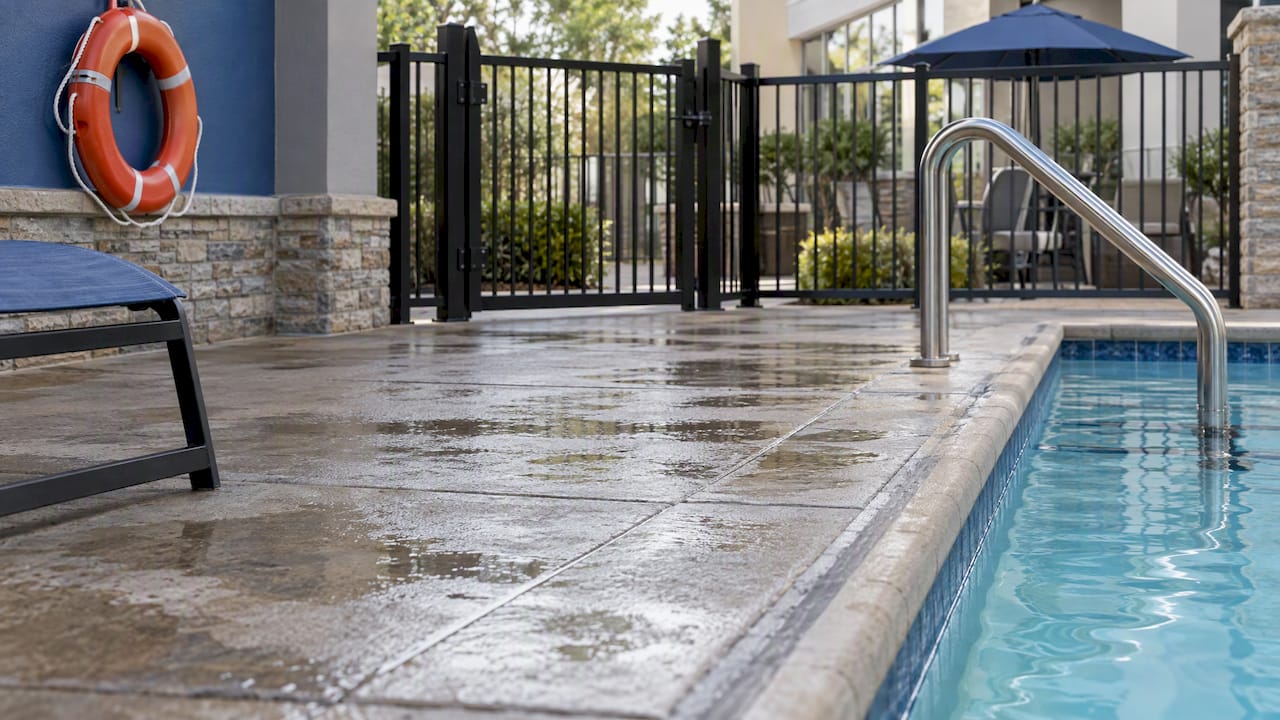
Slippery decks, broken gates, missing supervision, and unclear depth markings are the usual suspects. A hotel that opens a pool must keep it reasonably safe for the guests it invites to use it. Children are the most vulnerable here, and a death at a pool can support a wrongful death claim for the family.
Assaults and negligent security
A hotel can also be responsible when it fails to protect guests from foreseeable crime. According to the State Bar of Wisconsin, examples include faulty locks, poor lighting in parking areas, or ignoring known security patterns. Prior incident reports and complaints from other guests can show the danger was foreseeable.
What to do after a hotel injury
What you do in the first days shapes the claim. Here is the order we recommend.
- Get medical care right away. Your health comes first, and records created at the time of injury link the harm to the accident.
- Report the incident to hotel management in writing. Ask for a copy of the incident report. Do not guess about fault or sign anything.
- Photograph everything. Capture the floor, the spill, the missing handrail, the lighting, the warning signs (or lack of them), and your injuries. Do it before staff clean up.
- Save your records. Keep your reservation, receipt, key card, and any messages with the hotel.
- Get names. Write down witnesses, staff on duty, and anyone who saw the hazard before you did.
- Ask the hotel to preserve video. Surveillance footage is often overwritten within days, so an attorney’s preservation letter matters.
- Be careful with insurers. The hotel’s insurance adjuster is not working for you. Talk to an attorney before giving a recorded statement.
Bring torn clothing, shoes, and any medical devices you used. They can show how the accident happened.
What compensation can cover
The American Bar Association explains that compensation may include medical bills, lost wages, future wage losses, pain and suffering, disfigurement, or disability. The same guidance frames every claim around two issues: liability, meaning who is responsible, and damages, meaning the nature and extent of your harm.
That second issue is where claims are won or undervalued. We build damages with your treating doctors and, when the case calls for it, outside experts, so the number reflects your future care and income loss and not only today’s bills. Settling early for the first offer can leave real value on the table.
Pennsylvania deadlines and fault rules
Most personal injury lawsuits in Pennsylvania must be filed within two years of the injury, and claims against a government body can carry shorter notice requirements. Our guide to Pennsylvania personal injury laws explains deadlines, fault, and your rights in more detail. If you want a sense of how a case moves, read what happens when you file an injury claim in PA.
Courts across the country describe a similar path. Most claims settle before trial after both sides exchange documents, written questions, and testimony, a process the California Courts self-help guide outlines. Pennsylvania’s procedures differ in the details, but the pattern holds: a strong file built early gives you leverage in negotiation, and a case that is prepared for court gets taken more seriously.
If the hotel blames you, for example by saying you ignored a warning, do not accept that at face value. Fault is argued with evidence, and an attorney can test the hotel’s version. Our article on Pennsylvania slip and fall laws covers when a property owner is liable.
If you were hurt while working at a hotel
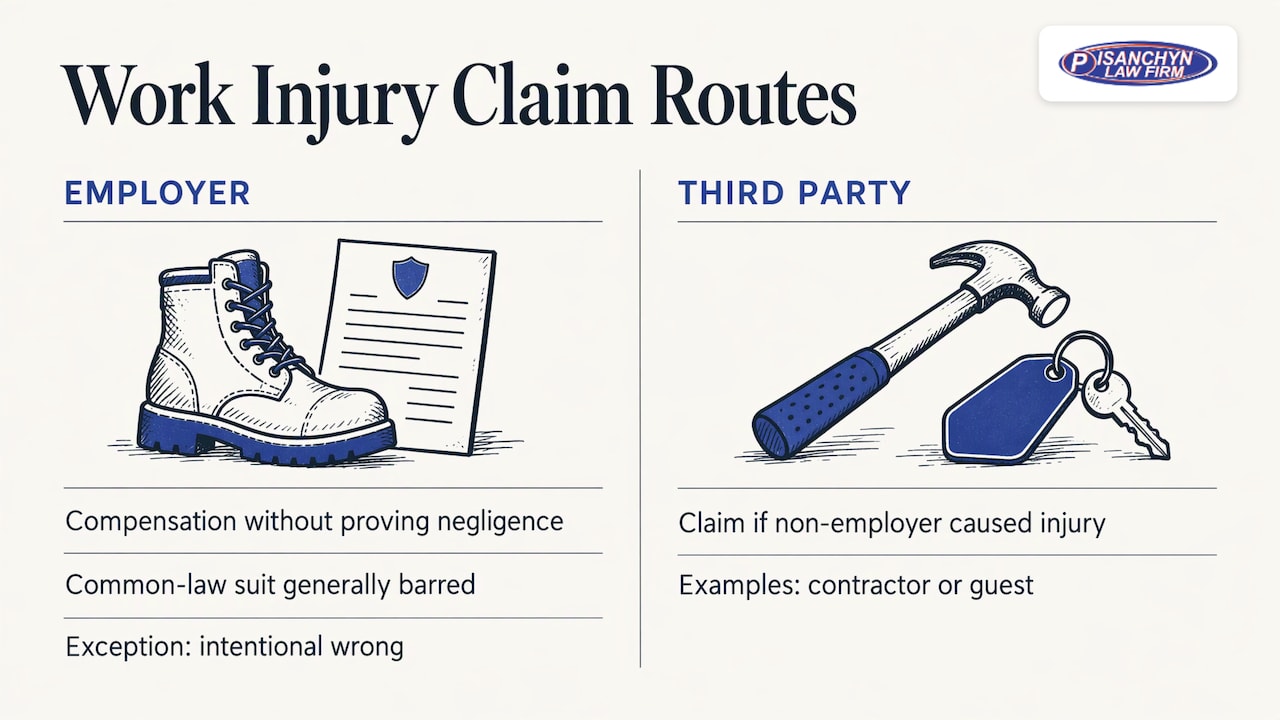
Hotel employees follow different rules. Under the Pennsylvania Workers’ Compensation Act, employers are liable for compensation for work injuries without regard to negligence, and generally cannot be sued at common law for the same injury except for intentional wrong. The same law leaves open claims against third parties when someone other than your employer caused the injury, such as an outside contractor or a guest.
Housekeeping, laundry, kitchens, and maintenance are physically demanding jobs. If your claim is denied, your benefits are cut off, or your employer pressures you, we fight for injured workers. Start with our page on Pennsylvania workers’ compensation and our guide on whether you can sue your employer.
When to call a hotel injury attorney
Call when the injury is serious, when the outcome is uncertain, or when the hotel or its insurer is already pushing back. The State Bar of Wisconsin advises consulting an experienced personal injury attorney in those situations, and discussing fees before committing. We make that part simple: you owe us nothing unless we secure a settlement or award.
Talk to Pisanchyn Law Firm
We represent injured people throughout Pennsylvania, including Philadelphia, Pittsburgh, Harrisburg, Scranton, and Wilkes-Barre. Our attorneys prepare each case around the client, gather the evidence, work with expert witnesses, negotiate hard, and litigate when an offer is not fair. You get direct access to your attorney throughout.

If a hotel stay left you hurt, contact Pisanchyn Law Firm for a free case review. Tell us what happened, and we will tell you where you stand.
FAQ
Can I sue a hotel if I slipped and fell in my room?
Yes, if the fall resulted from a hazard the hotel created, knew about, or should have found and fixed. Wet bathroom floors, worn rugs, and poor lighting are common examples. Your photos, the incident report, and maintenance records help show notice.
How long do I have to file a hotel injury claim in Pennsylvania?
Most personal injury lawsuits in Pennsylvania must be filed within two years of the injury. Claims against a government entity can have shorter notice requirements. Speak with an attorney soon so evidence and deadlines do not slip away.
What if I was a hotel guest but the injury happened in the parking lot?
Hotels must keep parking areas reasonably safe too. Poor lighting, broken pavement, or ignored security problems can all support a claim. Document the spot and report it to management in writing.
How much does it cost to hire a hotel injury attorney?
At Pisanchyn Law Firm, you pay no fee unless we win your case. Our fee comes from a percentage of the settlement or award, and we explain the terms before you sign anything.
Sources
- Hotel Liability: Simple Actions, Better Results
- National Floor Safety Institute Comments on Hotel Industry Slips and Falls
- Hotel Injury Liability
- State Bar of Wisconsin: I Need Information
- American Bar Association: Personal Injury Claims
- California Courts Self Help Guide: Personal injury cases
- The Pennsylvania Workers’ Compensation Act
Recommended
- Pennsylvania Slip and Fall Laws | When Is a Property Owner Liable?
- I just fell, now what? What to Do After a Slip and Fall in PA
- What Happens When You File an Injury Claim in PA
- Pennsylvania Personal Injury Laws: Deadlines, Fault and Your Rights