
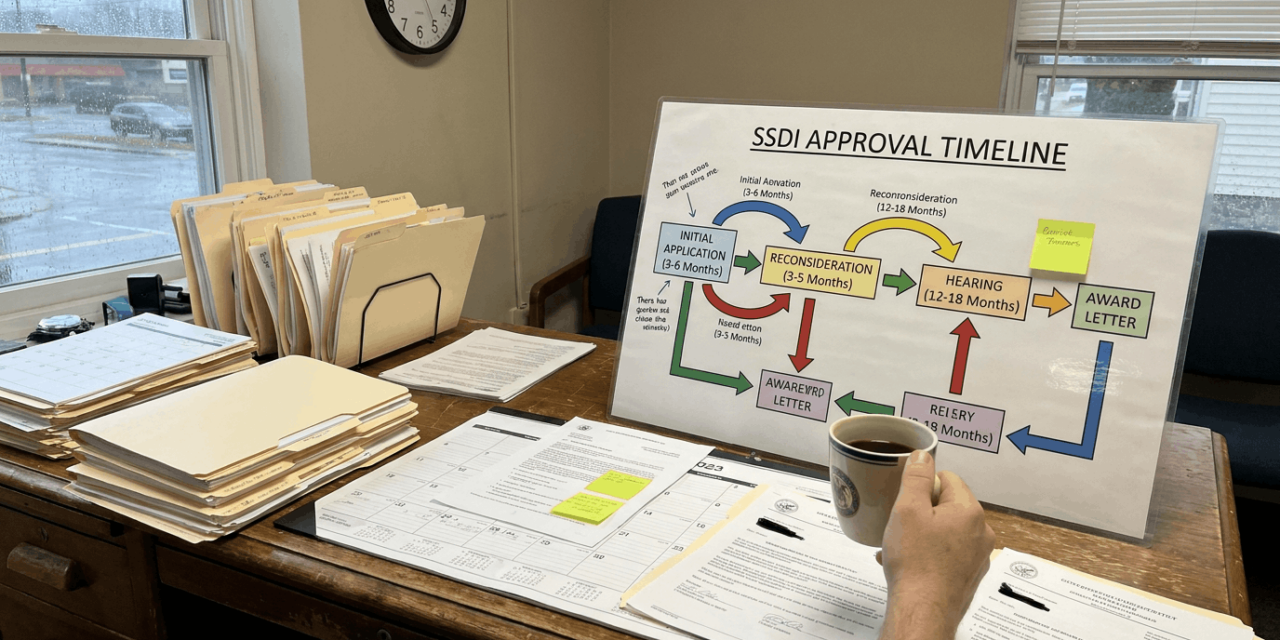
The honest answer is: longer than anyone wants, and knowing the real timeline upfront matters, both for planning your finances and for not giving up in the middle of a process that’s genuinely slow for everyone, not just you.
Stage by stage
Initial decision: commonly several months, often in the range of six to eight or more, depending on how quickly medical records come in and whether Social Security orders a consultative exam.
Reconsideration: typically several additional months for a second review of the file.
Hearing before an Administrative Law Judge: the long one. Between requesting a hearing and actually having one, waits commonly run a year or more depending on the hearing office’s backlog, and Pennsylvania offices carry real backlogs like everywhere else. Add time after the hearing for the written decision.
Add it up and a claim that goes all the way to a hearing frequently takes two years or more from first application to final decision. That’s not a worst case; that’s a normal contested case.
What can genuinely speed things up
Compassionate Allowances: certain serious conditions, including many aggressive cancers and some neurological diseases, qualify for dramatically expedited processing, sometimes weeks instead of years.
Terminal illness (TERI) and dire need cases: flagged for faster handling, dire need generally meaning inability to obtain food, medicine, or shelter, or facing foreclosure or eviction, documented in writing.
A complete file from day one: the single biggest controllable factor. Claims stall while examiners chase missing records. Complete treatment records, current provider lists, and detailed doctor statements submitted upfront remove the most common source of delay.
Responding fast to every request: consultative exam appointments, forms, and record requests each have clocks attached, and slow responses add months.
What doesn’t speed things up
Calling frequently for status doesn’t move a file. Neither does reapplying instead of appealing, which actually restarts the clock entirely, one of several reasons our guide on what to do after a denial pushes so hard on appealing rather than refiling.
The back-pay silver lining
The wait has one genuine consolation: benefits are generally paid retroactively based on your application and disability onset dates. A long wait that ends in approval typically includes a substantial back-benefit payment covering the time you waited, which is also why protecting your original filing date by appealing on time matters so much financially.
Surviving the wait
Keep treating, gaps in treatment during the wait hurt the claim itself. Keep records of every worsening symptom and new diagnosis, since evidence developed during the wait strengthens a hearing case. And if you’re considering some work during the process, read our guide on working while applying for disability first, since the rules there are strict and unforgiving. If finances are dire, our guide on SSDI vs. SSI explains whether SSI might be available alongside your SSDI claim.
Pisanchyn Law Firm helps Pennsylvanians push claims through this process as efficiently as the system allows. Call 1-800-444-5309 for a free case review.
Frequently Asked Questions
How long does an initial SSDI decision take? Commonly six to eight months or more, depending on medical record retrieval and whether a consultative exam is ordered.
How long is the wait for a disability hearing in Pennsylvania? Often a year or more after requesting one, depending on the hearing office backlog, plus additional time for the written decision afterward.
Can anything make an SSDI claim go faster? Compassionate Allowance conditions, terminal illness flags, and documented dire need can expedite processing. For everyone else, a complete medical file and fast responses to requests are the biggest controllable factors.
Do I get paid for the time I waited? Generally yes. Approved claims typically include retroactive benefits based on application and onset dates, which is why protecting your original filing date matters.
This article is for general informational purposes and does not constitute legal advice. Reading it does not create an attorney-client relationship.