
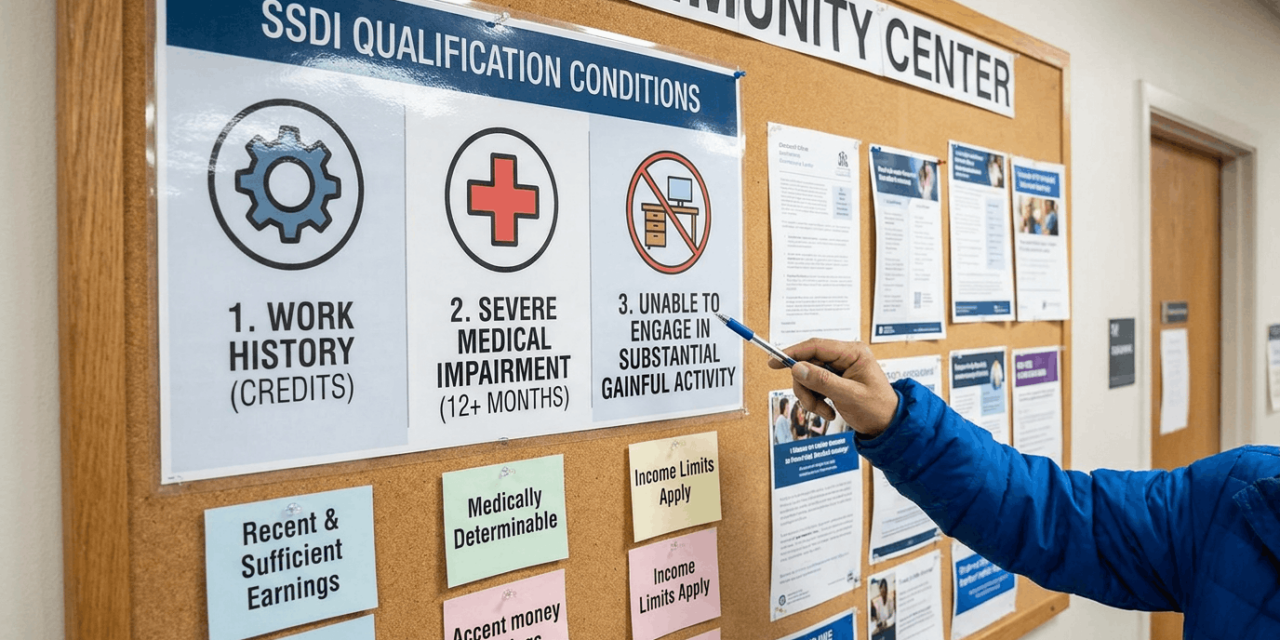
Here’s the misunderstanding that sinks a lot of claims before they start: people ask “is my condition on the list,” when the real question Social Security asks is “does your documented condition prevent you from working full time.” Diagnosis names matter less than proof of what the condition stops you from doing.
How Social Security actually evaluates disability
The standard: a medically determinable condition, physical or mental, severe enough to prevent substantial gainful activity, expected to last at least 12 months or result in death. Social Security maintains a listing of impairments (the “Blue Book”) with specific medical criteria, and meeting a listing generally means approval. But many, many people are approved without meeting a listing, based instead on a residual functional capacity assessment showing that their combined limitations rule out full-time work given their age, education, and work history.
Commonly approved categories
Musculoskeletal conditions: back and spine disorders, degenerative disc disease, arthritis, joint failures, among the most common approvals, and heavily dependent on imaging and documented functional limits.
Cardiovascular: heart failure, coronary artery disease, post-heart attack limitations.
Respiratory: COPD, asthma of documented severity, pulmonary fibrosis.
Neurological: epilepsy, multiple sclerosis, Parkinson’s, neuropathy, stroke aftereffects.
Mental health conditions: depression, anxiety disorders, PTSD, bipolar disorder, schizophrenia, fully legitimate bases for approval, with documentation of functional impact being the battleground.
Cancers, many of which qualify during treatment and recovery, with certain aggressive diagnoses qualifying for expedited processing under Compassionate Allowances.
Immune system disorders: lupus, rheumatoid arthritis, HIV-related illness.
Sensory losses: vision and hearing impairments meeting specific thresholds.
What actually gets claims approved: documentation
Two people with the same diagnosis can get opposite outcomes based on their files. What matters: consistent treatment history, objective findings (imaging, lab results, clinical exams), detailed statements from treating doctors about specific functional limits, how long you can sit, stand, lift, concentrate, and honest documentation of daily-life impact. Gaps in treatment read to an examiner as gaps in severity, fairly or not.
Multiple conditions matter together. A back condition alone might not prevent work, but combined with documented depression and diabetic neuropathy, the whole picture can. Every condition belongs in the claim.
Age matters more than most people realize
The rules become meaningfully more favorable at 50 and again at 55, since Social Security recognizes that switching to new types of work becomes less realistic with age. A claim that falls short at 45 can succeed at 55 on similar facts.
If you’ve been denied despite a serious condition
That usually signals a documentation problem, not a condition problem, and it’s fixable on appeal. Our guide on what to do after an SSDI denial covers the process, and our guide on what happens at an SSDI hearing explains the stage where documentation gets its full airing.
Wondering about the financial side while you pursue a claim? Our guides on working while applying and SSDI vs. SSI cover the two questions that come up most.
Pisanchyn Law Firm offers free case reviews for Pennsylvania disability claims. Call 1-800-444-5309.
Frequently Asked Questions
Is there an official list of qualifying conditions? Social Security’s listing of impairments sets criteria for many conditions, but you can be approved without meeting a listing if your documented limitations rule out full-time work.
Do mental health conditions qualify for SSDI? Yes. Depression, anxiety, PTSD, bipolar disorder, and other mental health conditions are legitimate bases for approval with proper documentation of functional impact.
Can multiple smaller conditions add up to a disability? Yes. Social Security must consider the combined effect of all your conditions, which is why every diagnosis belongs in your claim.
Does age affect SSDI approval? Significantly. The rules become more favorable at age 50 and again at 55, reflecting the reality that retraining for new work becomes less feasible.
This article is for general informational purposes and does not constitute legal or medical advice. Reading it does not create an attorney-client relationship.