
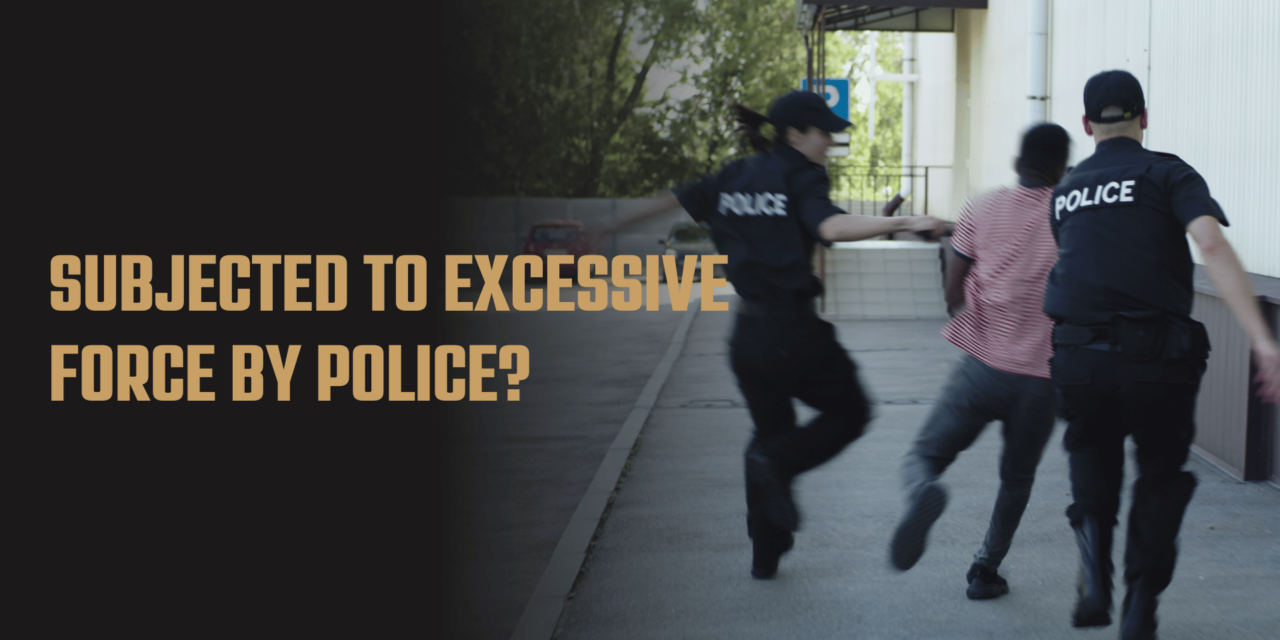
If you walked away from a police encounter injured, shaken, or wondering, “Was that even legal?” you’re not alone.
We hear it all the time:
- “Police slammed me into a wall. What now?”
- “They threw me to the ground for no reason.”
- “Can I sue police for excessive force?”
- “Is this police brutality?”
Here’s the truth: Not every use of force by police is illegal. But when officers go beyond what is reasonable and necessary, that crosses the line into excessive force and that can be a civil rights violation. If that happened to you, here’s what you need to know.
Lawful Force vs. Excessive Force: What’s the Difference?
Police officers are legally allowed to use force but only force that is reasonable under the circumstances. The legal standard comes from the Fourth Amendment and Supreme Court precedent. The question is whether the officer’s actions were “objectively reasonable” based on:
- The severity of the alleged crime
- Whether the person posed an immediate threat
- Whether the person was actively resisting or fleeing
Excessive force happens when an officer uses more force than was reasonably necessary.
Examples may include:
- Slamming someone into a wall during a minor traffic stop
- Tasing a person who is already restrained
- Striking a non-resisting individual
- Using chokeholds or dangerous restraints without justification
- Deploying weapons against someone who poses no threat
Each case depends on facts. That’s why documentation is critical.
Step 1: Seek Medical Treatment Immediately
Your health comes first. Even if you think you are “fine,” adrenaline can mask serious injuries. Internal bleeding, head trauma, torn ligaments, and spinal injuries may not show symptoms right away. Medical records are also powerful evidence in an excessive force lawsuit. They connect your injuries directly to the incident.
Do not skip this step.
Step 2: Preserve Evidence Immediately
Evidence disappears quickly in police misconduct cases. Here’s what you should do as soon as possible:
Photograph Everything
- Bruises
- Cuts
- Swelling
- Torn clothing
- Property damage
Take photos over several days as injuries develop.
Write Down What Happened
- Memory fades fast. Document:
- What was said
- Who was present
- Badge numbers
- Patrol car numbers
- Exact timeline
Identify Witnesses
Get names and contact information for anyone who saw what happened.
Save All Paperwork
- Citations
- Arrest paperwork
- Bail documents
- Hospital discharge papers
Step 3: Request Body Cam and Dash Cam Footage
Many departments use body cameras and vehicle cameras. However, footage is not automatically preserved forever. An experienced civil rights attorney can send formal preservation letters to prevent destruction of evidence. If you delay too long, that footage may be deleted under routine retention policies.
Step 4: Understand You May Have a Federal Civil Rights Claim
Excessive force cases are typically brought under 42 U.S.C. § 1983, the federal civil rights statute that allows individuals to sue government officials for constitutional violations.
To succeed, you generally must prove:
- The officer acted under color of law
- Your constitutional rights were violated
- You suffered damages as a result
Compensation in excessive force lawsuits may include:
- Medical expenses
- Lost wages
- Pain and suffering
- Emotional distress
- Permanent injury damages
- In some cases, punitive damages
Even if criminal charges are never filed against the officer, you may still have a civil claim.
Step 5: Do Not Assume Internal Affairs Will Protect You
Many people file internal complaints and assume the department will “handle it.” Internal investigations do not replace your right to pursue a civil lawsuit. Police departments investigate themselves. Civil litigation is different. It involves independent courts, sworn testimony, and legal accountability.
Step 6: Be Aware of Time Limits
Civil rights claims have strict statutes of limitations. In Pennsylvania, you generally have two years to file a federal civil rights lawsuit. But certain circumstances can change deadlines. Waiting too long can permanently bar your claim.
What About Qualified Immunity?
You may hear the term “qualified immunity.” This is a legal doctrine that can shield officers from liability unless they violated clearly established constitutional rights.
It does not mean officers cannot be sued. It means the case must be carefully built with strong legal arguments and factual evidence That is why working with experienced civil rights counsel matters.
If You’re Asking “Was That Excessive?” It’s Worth a Consultation
You do not need to know the legal answer before speaking to an attorney. If something felt wrong, violent, unnecessary, or retaliatory it deserves review.
Excessive force cases are fact-specific. Video, witness statements, injury documentation, and officer conduct all matter. If you were injured during an encounter with law enforcement, do not ignore it. You have rights.
Frequently Asked Questions
Can I sue police for excessive force in Pennsylvania?
Yes. If an officer used unreasonable force that violated your constitutional rights, you may file a federal civil rights lawsuit under 42 U.S.C. § 1983.
What qualifies as excessive force?
Force is excessive when it exceeds what is objectively reasonable under the circumstances, especially if you were not resisting, fleeing, or posing a threat.
What compensation can I recover in an excessive force lawsuit?
Damages may include medical bills, lost wages, pain and suffering, emotional distress, and potentially punitive damages.
What if there is no video?
Video is helpful but not required. Witness testimony, medical records, physical evidence, and officer reports can still support a case.
How long do I have to file a lawsuit?
In Pennsylvania, the statute of limitations for civil rights claims is generally two years from the date of the incident.


