
AMSAFE Seat Belts in Polaris Side-by-Side Vehicles
Seat belts play a critical role in protecting occupants during side-by-side, UTV, and off-road vehicle accidents. In rollover situations, restraints are often the primary line of defense between a survivable crash and a catastrophic outcome.
When serious injuries occur, an important question sometimes arises: did the seat belt itself perform as it was intended to?
This page examines how seat belts used in Polaris side-by-side vehicles are designed to function, what has been reported during rollover and submersion accidents, and when potential product liability concerns may warrant further investigation.
Who Manufactures Seat Belts for Polaris Side-By-Side Vehicles
Many Polaris side-by-side vehicles use seat belt systems manufactured by AMSAFE, a company that designs and supplies restraint systems for a wide range of transportation and industrial applications.
In these vehicles, AMSAFE functions as a component supplier, meaning it designs and manufactures the seat belt or restraint system that is integrated into the vehicle by the manufacturer. While the vehicle maker designs the overall platform, component suppliers are responsible for ensuring that their systems are safe, properly tested, and suitable for foreseeable use conditions.
Identifying the role of each party is an important step in understanding how restraint systems function and where responsibility may lie when serious injuries occur.
How Side-By-Side Seat Belts Are Designed to Function
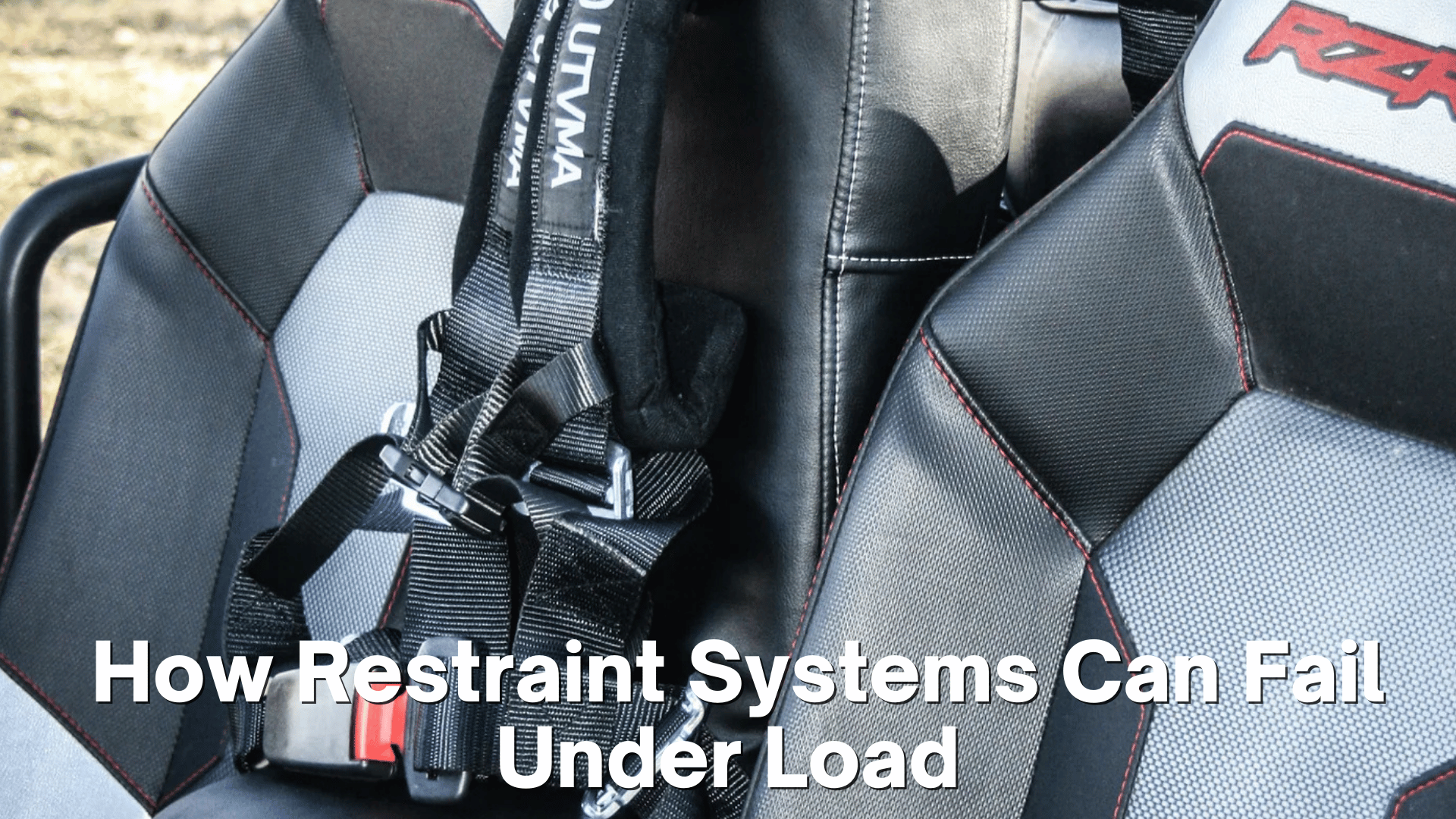
Seat belts used in side-by-side vehicles are typically designed to function under normal upright driving conditions. Like automotive seat belts, many rely on a combination of mechanical locking systems intended to restrain occupants during sudden movement.
Common design features may include:
-
Gravity-based locking mechanisms, which engage when the belt senses rapid deceleration or change in position
-
Emergency locking retractors (ELRs), designed to lock the belt during abrupt motion
-
Manual release mechanisms, intended to allow occupants to exit the vehicle after stopping
Under standard conditions, these systems are meant to restrain occupants during a crash and then allow release once the vehicle comes to rest. However, these designs are typically optimized for upright orientation a key factor when evaluating performance during rollovers.
What Can Happen During a Rollover or Submersion
Rollover accidents introduce forces and conditions far different from normal driving scenarios. When a side-by-side rolls, the vehicle may come to rest on its side or completely inverted, placing the restraint system under unusual stress.
In reported incidents and alleged failures, several issues have been raised during rollovers or submersion events, including:
-
Increased load on the seat belt, caused by body weight shifting against the restraint
-
Locking mechanisms under continuous tension, which may affect release
-
Vehicle orientation changes, where gravity-based systems behave differently upside down
-
Difficulty locating or operating the release mechanism while inverted or submerged
These conditions can create time-sensitive escape situations, especially when water, fire, or fuel leaks are present. Even a short delay in exiting the vehicle can significantly increase the risk of severe injury or death.
Entrapment, Drowning, and Increased Injury Risk
When a restraint system does not release as expected after a rollover, occupants may become trapped inside the vehicle. Entrapment can dramatically increase the severity of injuries, particularly in high-risk scenarios.
These risks may include:
-
Water submersion, where trapped occupants face drowning hazards
-
Fire or smoke exposure, following a crash
-
Crush injuries, when the vehicle rests on the occupant
-
Loss of consciousness, making self-rescue impossible
In these situations, restraint performance becomes a critical factor in the outcome of the accident. For this reason, seat belt function is often closely examined in catastrophic off-road crashes.
Product Liability and Seat Belt Design Responsibilities
Manufacturers and component suppliers have legal responsibilities related to the design and safety of restraint systems. These duties generally include:
-
Designing systems for foreseeable events, including rollovers
-
Testing restraints under real-world conditions, not just ideal scenarios
-
Providing adequate warnings or instructions, when limitations exist
-
Ensuring compatibility between the restraint system and the vehicle platform
Product liability concerns may arise when a restraint system is alleged to have failed, malfunctioned, or performed differently than expected during a foreseeable accident scenario.
Determining responsibility often requires careful analysis of design, testing, warnings, and how the restraint functioned at the time of the crash.
When a Seat Belt Failure May Be Investigated
Not every accident involves a defective product. However, when catastrophic injuries occur and restraint performance is in question, a product liability investigation may be appropriate.
These investigations often involve:
-
Post-accident inspection of the vehicle and seat belt system
-
Preservation of evidence, including the restraint and mounting points
-
Review of design and testing documentation
-
Analysis of accident conditions, including rollover dynamics
Because evidence can be lost or altered over time, early legal guidance can be critical in cases involving potential restraint system failures.
Understanding whether a seat belt performed as intended is an important step in determining accountability and preventing similar tragedies in the future.
Common FAQ
Who manufactures seat belts used in Polaris side-by-side vehicles?
Many Polaris side-by-side vehicles use seat belt systems manufactured by AMSAFE, a company that supplies restraint systems as a component manufacturer.
How are side-by-side seat belts designed to work?
These seat belts typically rely on mechanical locking systems designed to restrain occupants during sudden movement while allowing release once the vehicle comes to rest under normal upright conditions.
Why can seat belts be difficult to release after a rollover?
During rollovers, vehicles may rest upside down or on their side, placing unusual stress on restraint systems and changing how gravity-based mechanisms behave.
Can seat belt performance affect injury severity in off-road accidents?
Yes. When restraint systems do not perform as expected, occupants may become trapped, increasing the risk of drowning, crush injuries, fire exposure, or loss of consciousness.
When is a seat belt failure investigated as a product liability issue?
A seat belt failure may be investigated when catastrophic injuries are linked to how the restraint system performed during a foreseeable event like a rollover or submersion.